
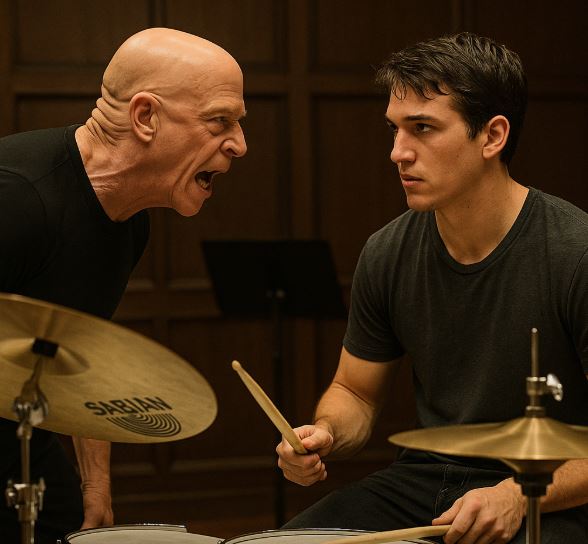
What Whiplash Gets Wrong About Music Education
/by Dennis WingeEvery once in a while, a film about music captures the public’s imagination. Whiplash (2014), Damien Chazelle’s gripping drama about a young jazz drummer and his abusive teacher, is one of those films. It won Academy Awards, electrified audiences, and left people debating the cost of greatness.
But as a professional musician and teacher, I walked away with mixed feelings. While the movie is undeniably powerful as cinema, it sends the wrong message about what music is and how it should be learned.
And I’m not alone. Many musicians—from world-class jazz drummers to YouTube educators like Adam Neely—have voiced strong critiques of how Whiplash portrays music education. In this article, I want to share not only my own reflections but also those of the wider music community. Together, they reveal why the film’s message can be misleading for students and what real music learning should look like.
Music Is Not a Competition
The central flaw of Whiplash is the way it treats music like a competitive sport. The protagonist, Andrew Neiman, practices until his hands bleed, submits to brutal humiliation, and measures success in terms of beating rivals and winning the approval of his tyrannical band director, Terence Fletcher.
This framing makes for a dramatic story. But it’s a distortion of reality. Music is not a competition—it’s an art form.
Great musicians like Charlie Parker didn’t practice long hours because they wanted recognition or status. They practiced because they were inspired, because they loved the sound of music, and because they had something unique to say. Discipline was there, of course, but it was always driven by passion.
When I practice long hours myself, even into my fifties, it’s not because I’m trying to prove anything. It’s because I love music and want to go deeper. That joy, that sense of discovery, is what keeps musicians coming back day after day.
This is where Whiplash misleads students. It suggests that greatness comes from punishment, fear, and external pressure, rather than from curiosity, love, and internal motivation.
The Problem With Strict & Disciplinary Teaching Styles
One of the film’s most talked-about aspects is Fletcher’s teaching style. He throws chairs, uses slurs, and manipulates students with psychological cruelty. At one point, he deliberately sets Andrew up to fail on stage just to “test” him.
Let’s be clear: this is not teaching.
A real teacher’s role is to inspire, encourage exploration, and guide students toward their own discoveries. Yes, there are technical skills to master, and yes, practice takes effort. But no amount of fear, intimidation, or manipulation will ever produce genuine artistry.
Legendary drummer Peter Erskine summed it up perfectly:
“I’m disappointed that any viewer of the film will not see the joy of music-making that’s almost always a part of large-ensemble rehearsals and performances. Musicians make music because they LOVE music. None of that is really apparent in the film.”
Teaching should never strip away joy. In fact, joy is the fuel that makes growth possible.
Integrity Matters More Than Recognition
Another troubling element of Whiplash is its ending. After being sabotaged, Andrew redeems himself with an explosive solo that wins Fletcher’s approval. The film closes on this moment of recognition, as if the approval of an abusive teacher is the ultimate prize.
But what about integrity?
True musicianship is not only about technical skill—it’s about character. A student who endures abuse for the sake of applause may earn recognition in the short term, but they risk losing sight of the deeper purpose of music.
Great art comes from honesty, compassion, and integrity. Without those, all the discipline and virtuosity in the world will not make you a truly great musician.
Why the Film Feels Like a Sports Movie
Adam Neely, a bassist and educator with millions of followers, has pointed out that Whiplash feels less like a film about jazz and more like a sports drama. Fletcher is cast as the ruthless coach, Andrew as the rookie athlete, and the climactic concert is staged like a championship game.
That structure works beautifully for storytelling—but it misrepresents what jazz is really about. Jazz thrives on collaboration, listening, interaction, and joy. It is not about “beating” your bandmates. It’s about creating something together.
By missing this, the film misses the heart of jazz.
The Joy That’s Missing
Perhaps the biggest omission in Whiplash is joy.
For most musicians, joy is at the center of what we do. Yes, there are hard days. Yes, we struggle, get frustrated, and sometimes feel like giving up. But at the heart of it all is love: the love of sound, the thrill of playing with others, the connection we feel with audiences, and the sense of expression that only music can bring.
In Whiplash, that joy is absent. Music is portrayed as grim, punishing, and joyless—a battle of wills rather than a celebration of sound. That’s not the music I know, and it’s not the music I want my students to pursue.
What Real Teaching Should Look Like
If Whiplash shows us what not to do, then what does good teaching look like?
-
Inspiration – A teacher should spark curiosity, showing students possibilities they didn’t know existed.
-
Encouragement – Growth requires patience. Students need support, not fear.
-
Exploration – Music is a creative art. Teachers should encourage experimentation, risk-taking, and personal voice.
-
Guidance – Yes, structure matters. But structure should serve creativity, not suppress it.
-
Joy – Above all, teaching should nurture joy in making music. Without joy, students won’t last.
I see my role not as a disciplinarian but as a guide. My job is to open doors, show paths, and encourage students to walk their own journey with confidence and excitement.
What Students Should Take Away From Whiplash
If you’re a student who’s seen Whiplash, here’s what I hope you remember:
-
You don’t need to bleed for your art to become great. In fact, creating great art on a consistent, long-term basis requires a significant amount of self-nurturing.
-
Recognition and status are far less important than integrity and joy.
-
The best musicians practice out of love, not fear.
-
Abuse and intimidation are not teaching tools. If you encounter them, walk away.
-
True greatness comes not from “winning” but from expressing yourself authentically.
The Healing Power of Music
At its best, music is healing. It uplifts, connects, and inspires. It makes weddings, parties, and even everyday life more special. That’s the kind of music I want to teach and play—the kind that makes the world better, not harsher.
When movies like Whiplash frame music as combat, they obscure this truth. They make it seem as though the only path to greatness is suffering and abuse. But the real power of music lies in its ability to bring joy, love, and connection into the world.
Conclusion
Whiplash may be an award-winning film, but it’s misleading. As cinema, it’s gripping. As a portrayal of music education, it’s deeply flawed. By presenting music as a sport, teaching as abuse, and recognition as the ultimate goal, it sends the wrong message to students about what music is and how it should be learned.
The truth is simpler, and far more beautiful: music is about joy, passion, integrity, and connection. If you’re learning music—whether guitar, drums, or any other instrument—remember this: the goal is not to outcompete anyone or to suffer your way to success. The goal is to love the journey, to deepen your artistry, and to share that joy with others.
Because at the end of the day, the world doesn’t need more tortured competitors. It needs more musicians who play with heart.
Book a free trial lesson, available both in-person and online. Fill out this form and we’ll respond within 24 hours.

