
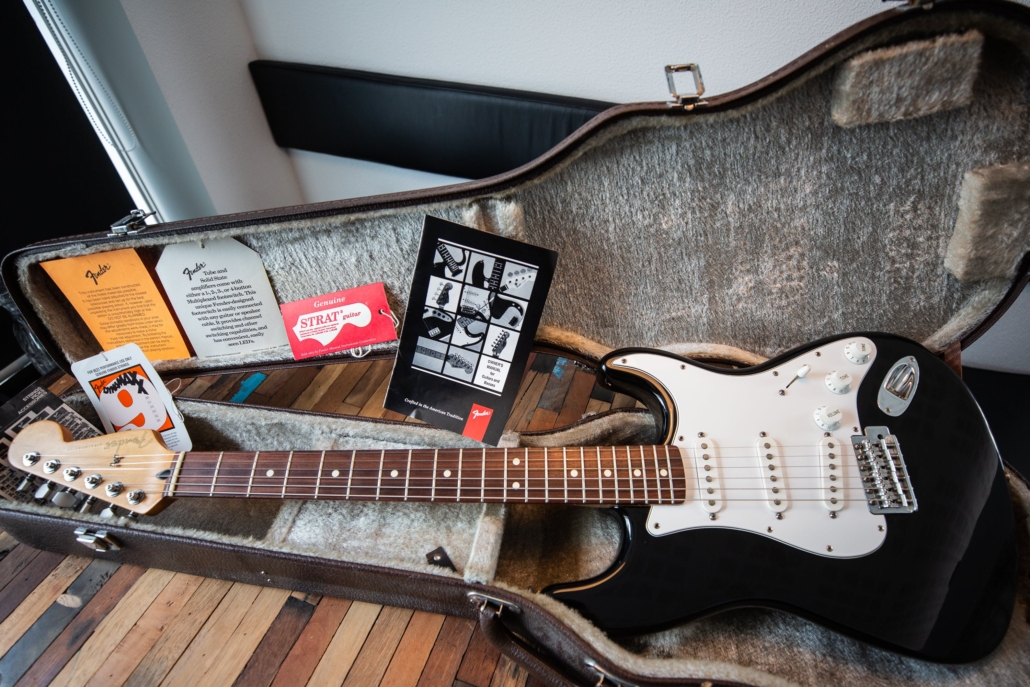
Unlocking the Tonal Possibilities of Your Fender Stratocaster and Similar Guitars
Your guitar is not just an instrument; it’s a canvas of sonic possibilities. Among the most versatile guitars out there, the Fender Stratocaster offers a rich palette of tones waiting to be explored. In this guide, we’ll take a deep dive into understanding and harnessing the various tone settings on your Stratocaster (or any guitar with a similar construction). Let’s embark on a journey to unlock the full spectrum of sounds at your fingertips.
The Five-Way Pickup Selector Switch
At the heart of your tonal exploration is the five-way pickup selector switch. Each position offers a distinct combination of pickups, providing unique tonal characteristics. Here’s an in-depth look at each position, including when and why you might use it:
Position 1: Bridge Pickup
- Tonal Characteristics: Delivers bright, cutting tones with a pronounced treble response. This setting is ideal for crisp lead lines and punchy rhythms.
- Usage Tips: Perfect for genres like rock and metal where a sharp, defined sound is needed. It excels in solos that require clarity and articulation, as the brightness of the bridge pickup helps cut through dense mixes.
Position 2: Bridge and Middle Pickups
- Tonal Characteristics: Strikes a balance between warmth and brightness, creating a slightly hollow sound. This position is great for funky rhythms and clean, articulated solos.
- Usage Tips: Ideal for funk, pop, and blues where a balanced, quacky tone enhances the music. It’s also commonly used for rhythm parts in clean tones, offering a percussive and bouncy character.
Position 3: Middle Pickup
- Tonal Characteristics: Offers a warm, full-bodied sound with a smooth midrange. This setting is perfect for clean arpeggios and chord progressions.
- Usage Tips: Excellent for genres like jazz, country, and classic rock where a mid-focused tone is desirable. It’s versatile for rhythm or lead work, providing a neutral tonal character that’s neither too bright nor too dark.
Position 4: Middle and Neck Pickups
- Tonal Characteristics: Emits a smooth, bell-like tone with enhanced bass response. This position is ideal for soulful, expressive playing.
- Usage Tips: Great for blues, soul, and R&B where a creamy, rounded tone is required. It’s also a favorite for clean tones in ambient or effects-heavy styles, offering warmth and smoothness.
Position 5: Neck Pickup
- Tonal Characteristics: Produces a warm, rounded sound with rich bass frequencies. This setting is excellent for creamy, sustained leads and warm rhythm parts.
- Usage Tips: Perfect for blues, jazz, and classic rock where a smooth, warm tone is needed. Many guitarists favor this position for solos that require an expressive, vocal-like quality.
When Players Use Each Position
- Rock and Blues: Positions 1 and 5 dominate for lead work, with Position 2 occasionally for funkier, rhythmic lines.
- Funk and Pop: Positions 2 and 4 shine for clean, percussive rhythms.
- Jazz: Position 5 is favored for its warm, rounded tone.
- Ambient and Effects: Positions 4 and 5 provide smooth, warm tones that pair beautifully with modulation and reverb effects.
Mastering the Tone Knobs
Your guitar is equipped with two tone knobs, one for the neck pickup and another for the middle pickup. These knobs allow you to adjust the high frequencies, enabling you to sculpt your sound further:
Tone Control Tips
- Clockwise: Reduces the high frequencies, resulting in a warmer tone. Useful for mellowing out the brightness for genres like jazz or blues.
- Counterclockwise: Brightens the sound, enhancing clarity and presence. Ideal for cutting through in a mix, especially in rock or pop music.
Experiment with subtle adjustments on the tone knobs to discover the nuances in your sound. They’re invaluable for taming brightness or emphasizing warmth in specific contexts.
Using Amp Settings in Tandem
Your amplifier is another crucial component in shaping your tone. Experiment with different amp settings like gain, EQ, and reverb to complement your guitar’s tonal variations. Here are some tips:
Gain
- Low Gain: Suitable for clean or slightly overdriven sounds, providing clarity and detail.
- High Gain: Adds distortion and sustain, perfect for rock, metal, and lead playing.
EQ (Bass, Mid, Treble)
- Bass: Adjust to add or reduce low-end punch. More bass for a fuller sound, less for a tighter, more defined tone.
- Mid: Crucial for presence and clarity. Boost mids for a more prominent sound, cut for a scooped, modern tone.
- Treble: Controls the high-end sparkle. Increase for more brightness and clarity, decrease for a smoother, less harsh tone.
Reverb
- Usage: Adding reverb can enhance the spaciousness of your sound, giving it more depth and atmosphere.
Effect Pedals and Your Stratocaster
Effect pedals open up a world of sonic exploration. Experiment with pedals like overdrive, distortion, chorus, and reverb to add layers and textures to your sound. Consider how these effects interact with your chosen pickup configuration:
Overdrive/Distortion
- Function: Adds grit and sustain to your tone. Use them to enhance your lead lines or add crunch to your rhythms.
Chorus
- Function: Creates a shimmering, wide sound. Great for clean tones and adding depth to your playing.
Reverb
- Function: Adds ambient space to your sound. Perfect for creating a larger-than-life feel.
Listening and Fine-Tuning
The most important aspect of managing tone settings is to trust your ears. Spend time playing with different configurations and listen closely to how each setting impacts the sound. Here are some tips:
Recording and Reviewing
- Record Your Playing: Capture different settings and listen back to see which tones you prefer.
Live Testing
- Test in a Live Setting: Evaluate how your tone interacts with other instruments and the room acoustics.
Continuous Experimentation
- Keep Tweaking: Your preferences might evolve over time. Continuously experiment to find what works best for you.
Understanding Your Tone Knobs
Many Strat players learn the pickup selector but never really understand the tone controls. On a traditional Stratocaster, one tone knob controls the neck pickup while the other controls the middle pickup. The bridge pickup often bypasses the tone circuit entirely unless the guitar has been modified.
Tone controls work by gradually reducing higher frequencies. Turning the knob down does not simply make the guitar darker; it changes the balance between bass, midrange, and treble frequencies.
Some practical starting points:
• Tone on 10: maximum brightness and attack.
• Tone on 7–8: balanced and versatile.
• Tone on 5–6: smoother leads and rhythm work.
• Tone on 2–4: jazzier sounds and warmer blues tones.
Learning to use the tone knobs effectively can make one guitar feel like several different instruments.
H2: Why Positions 2 and 4 Sound So Unique
Many players are drawn to Positions 2 and 4 because of their distinctive “quack” or “hollow” sound. This tone comes from combining two pickups at once.
Because the pickups are located in different places along the string, they hear slightly different portions of the string’s vibration. When these signals are combined, certain frequencies are reinforced while others are reduced.
The result is a tone that is:
• Less aggressive than the bridge pickup.
• Brighter than the neck pickup.
• Highly articulate.
• Excellent for rhythmic playing.
This sound became a defining characteristic of funk, pop, country, and blues guitar.
Pickup Height and Tone
Many guitarists spend hundreds of dollars on pickups when a simple screwdriver adjustment might produce a dramatic improvement.
Moving pickups closer to the strings generally increases:
• Output
• Compression
• Sustain
• Midrange presence
Lowering pickups often creates:
• More clarity
• Better note separation
• Greater dynamic range
A pickup that sits too close to the strings can even interfere with the string’s vibration due to magnetic pull, causing tuning and intonation issues.
Before replacing pickups, experiment with pickup height adjustments.
Famous Strat Sounds and How They Were Created
One of the easiest ways to learn tone is by associating sounds with players.
Jimi Hendrix often favored the neck pickup and neck-middle combinations for warm, expressive lead work.
Stevie Ray Vaughan frequently used neck and neck-middle settings to achieve his thick blues tone.
Mark Knopfler became known for the clean, articulate sounds associated with Positions 2 and 4.
Eric Johnson often used the neck pickup for his violin-like lead tone.
Listening to great players while paying attention to pickup selection can dramatically improve your understanding of tone.
Using Pickup Changes as a Musical Tool
Many players choose one pickup setting and leave it there for an entire performance. Professional guitarists often treat pickup selection as part of the arrangement.
For example:
• Verse: Neck pickup for warmth.
• Chorus: Position 2 or 4 for added clarity.
• Solo: Bridge pickup for extra projection.
• Outro: Neck pickup for a softer ending.
Learning to change pickup settings during a song can add contrast and excitement without touching a pedal.
Conclusion
Your Fender Stratocaster is more than just a guitar; it’s a sonic playground waiting for your creative touch. By mastering the various tone settings and understanding how they interact, you’ll unlock a world of musical possibilities. Whether you’re playing blues, rock, funk, or jazz, the Strat has a tone for every occasion. Embrace experimentation, trust your ears, and let your unique voice shine through your instrument. Happy playing!
Discover the joy of music with a free trial lesson at Guitar Lessons Myrtle Beach, available both online and in-person. Simply fill out this form and we’ll get back to you within 24 hours.
—
Discover the joy of music with a free trial lesson at Guitar Lessons Myrtle Beach, available both online and in-person. Simply fill out this form and we’ll get back to you within 24 hours.
